Why "Messy Play" is Crucial for Your Baby's Brain (And How to Survive the Cleanup)
Amelia Dalgety
Picture a nine-month-old sitting in a highchair. Half a bowl of pureed pumpkin is smeared across their face. The other half is slowly dripping onto the floorboards. It looks like a disaster zone.
But it’s actually a masterclass in cognitive development.
Babies learn entirely through their senses. Every squish, splash, and smear fires up millions of neural pathways in their developing brains. Tactile play is not just about keeping a child occupied while the kettle boils. It is serious brain training. When a baby grabs a handful of wet spaghetti, they are learning about physics, temperature, and spatial awareness. They are figuring out cause and effect. Drop the spaghetti; it makes a sound. Squeeze the jelly; it breaks apart. This kind of hands-on exploration builds a stronger, more adaptable brain. Data from early childhood development programs shows a noticeable increase in early problem-solving skills among toddlers who participate in daily sensory activities.
Building Sensory Tolerance
Ever wondered why some toddlers refuse to touch wet sand at the beach? Or why they scream when wearing a scratchy woolly jumper?
Sensory processing issues often stem from a lack of varied tactile exposure early on. Take a walk past any local playgroup and watch the toddlers around a sandpit. You will easily spot the ones who have never been allowed to get dirty. They hold their hands up in the air, visibly distressed by the unfamiliar grit on their palms.
Messy play acts as a brilliant preventative measure against sensory aversions. Introducing different textures early helps normalise those strange sensations. Slime, mud, kinetic sand, and water play teach the nervous system that new feelings are safe. A child who regularly digs their hands into flour or edible finger paint is far less likely to become an overly fussy eater later down the track. They already understand that slimy or gritty textures are just part of life. They learn to tolerate the uncomfortable.
The Motor Skills Workout
There is a massive physical payoff, too. Chasing a slippery piece of watermelon across a plastic tray forces a baby to refine their pincer grasp. This tiny, precise movement is the same skill they will need years later to hold a lead pencil or button up a school uniform.
Scooping water with a plastic cup? That is bilateral coordination. Pouring it out again? Hand-eye coordination. These activities look totally chaotic to an adult. Yet, they are perfectly engineered developmental exercises. Watch a baby try to pick up a single frozen pea from a bowl of water. The intense concentration required for that one simple task is staggering.
Surviving the Chaos
Knowing the science doesn’t make scrubbing beetroot stains out of a white onesie any easier. The cleanup is the exact reason many parents avoid messy activities entirely. Who can blame them?
The trick is strategic containment. Stripping a baby down to just a nappy is the oldest and most effective trick in the book. If clothes are necessary due to a cold breeze, dedicate a specific set of play clothes that are allowed to get wrecked. Accept right now that they will never look clean again.
Sometimes, the mess entirely escapes the containment zone. Parents living around the leafy, family-heavy suburbs of Sydney know that managing time between work, school runs, and weekend sports is hard enough without a mountain of heavily stained clothes. When the nappy bag is overflowing with paint-covered towels and muddy rompers after a weekend playing down by the harbour, outsourcing the problem is a brilliant tactical move. Dropping the lot at a reliable laundry service North Shore families trust can save hours of soaking and scrubbing at the laundry sink. It buys back precious weekend time to actually sit down and enjoy the family.
Setting Up Low-Stress Stations at Home
Messy play does not require expensive, complicated kits. The best setups use everyday items already sitting in the kitchen pantry.
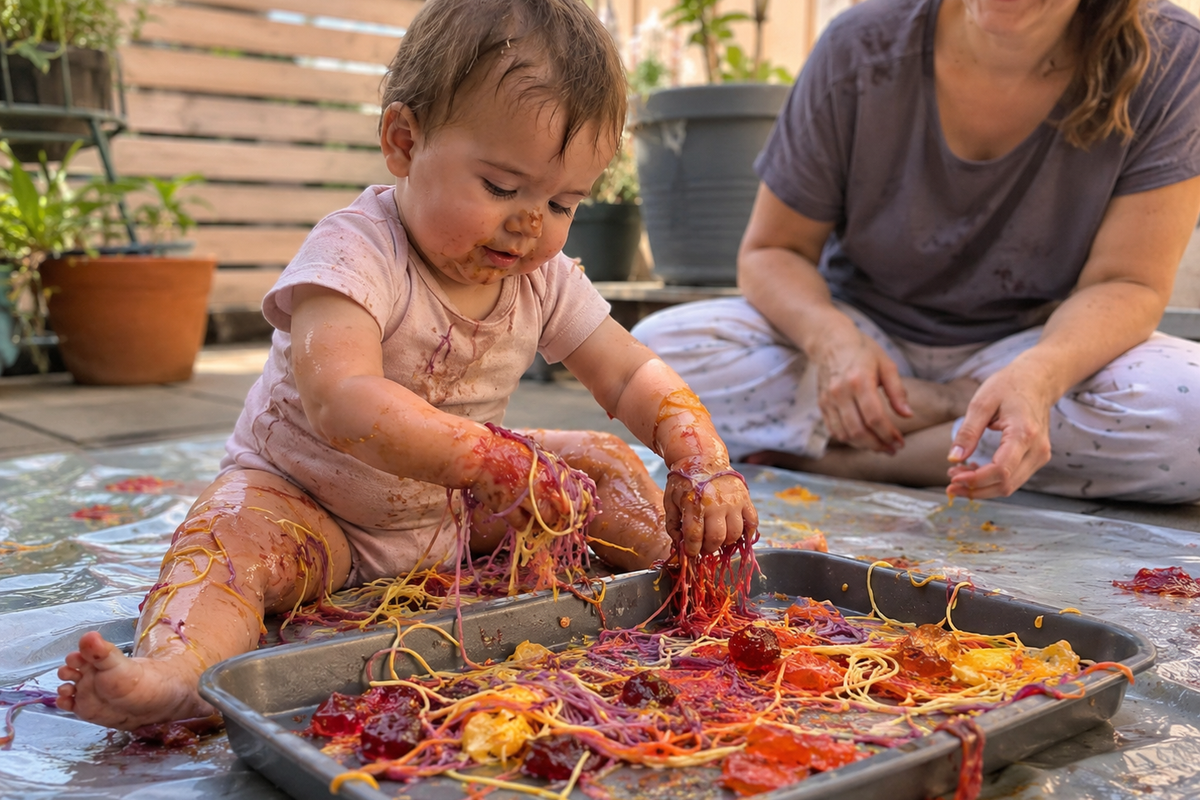
Cooked pasta is a guaranteed winner. Add a few drops of natural food colouring to a bowl of plain spaghetti. It is cheap, non-toxic, and fascinating for little hands. Let them pull it apart and mash it into paste.
Jelly rescue is another fantastic afternoon activity. Submerge a few chunky plastic farm animals in a bowl of sugar-free jelly and let it set in the fridge overnight. Hand the baby a wooden spoon, and let them hack away to free the animals. The texture is bizarre, cold, and entirely captivating.
Location Is Everything
Take the fun outside whenever possible. A patch of grass or an outdoor balcony makes wiping up infinitely easier.
If stuck indoors on a rainy afternoon, the dry bathtub is the perfect controlled environment. Put the baby in the empty tub with some child-safe paints or a bowl of coloured ice cubes. Once they’re finished, simply turn on the tap to clean up the baby and wash the mess down the drain.
Efficiency at its finest. No stress. Just happy, developing brains.